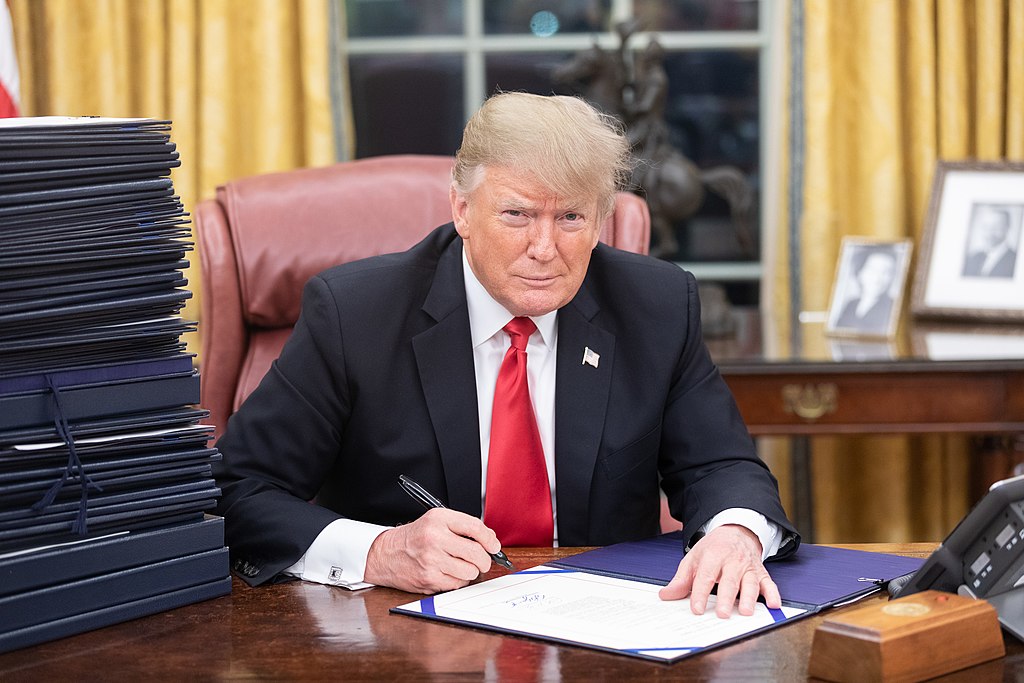
U.S. President Donald Trump refused to comment Wednesday on whether the United States would allow China to take Taiwan by force. “I never comment on that,” he said during a White House Cabinet meeting, avoiding a direct stance on Taiwan’s sovereignty.
Trump emphasized maintaining strong U.S.-China relations despite ongoing trade tensions and tariffs. Beijing, which claims Taiwan as its own, has never ruled out using force to assert control. Taiwan, a self-governing democracy, firmly rejects China’s claims.
U.S. Secretary of State Marco Rubio reaffirmed Washington’s commitment to Taiwan, stating in a Fox News interview that the U.S. opposes any coercive changes to Taiwan’s status. He highlighted America’s longstanding commitments to Taiwan’s security, warning China against military action.
The United States, which switched diplomatic recognition from Taipei to Beijing in 1979, follows a “strategic ambiguity” policy, keeping its military response to a potential Chinese invasion unclear. However, under the Taiwan Relations Act, Washington remains Taiwan’s key defense ally, providing arms and support.
Trump’s predecessor, Joe Biden, took a more explicit approach, stating that U.S. forces would defend Taiwan if attacked. Trump’s reluctance to confirm a military response underscores ongoing uncertainty in U.S. policy on Taiwan amid rising tensions with China.