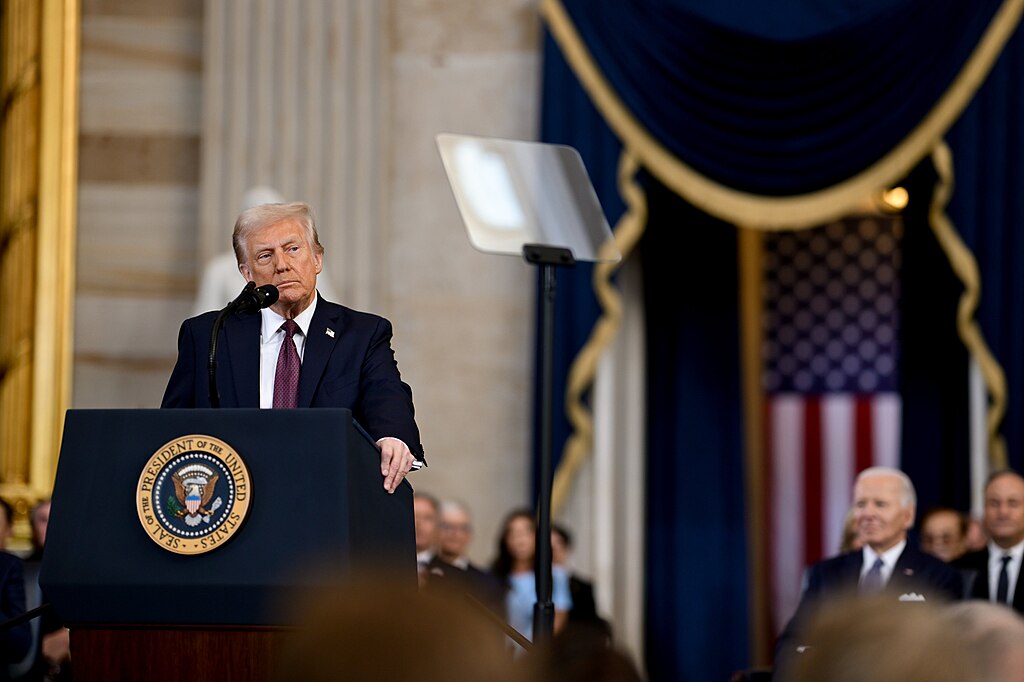
Bank of America analysts say President Donald Trump’s recent comments on Truth Social indicate a potential shift in housing finance policy if he returns to office. Trump’s messaging appears to favor a “recap and keep” approach for Fannie Mae (OTC:FNMA) and Freddie Mac (OTC:FMCC), differing from the long-standing “recap and release” strategy post-2008.
Despite the rhetoric, analysts at BofA’s 2025 Housing Symposium believe meaningful reform in the near term is unlikely. High mortgage rates, political timing before the midterms, and the complexities of unwinding the government’s $300 billion+ liquidation preference make swift changes improbable.
The two government-sponsored enterprises (GSEs) remain approximately $135 billion short of meeting the capital thresholds required under the Preferred Stock Purchase Agreements (PSPAs). However, experts at the symposium argued that these requirements are overly conservative and may be revised.
Encouragingly, the risk profile of Fannie and Freddie has significantly improved since the financial crisis. The GSEs are now capitalized at about 2.15%, compared to just 0.45% before the crisis. Analysts noted that the institutions carry far less risk today.
Panelists were cautiously optimistic about FHFA Director Bill Pulte’s leadership. While his limited experience raises concerns, his private-equity-style approach is seen as a potential catalyst for operational efficiency, profit orientation, and reduced bureaucracy. There is also speculation that Fannie and Freddie’s mandates could expand to include higher-margin segments like second liens and vacation homes—areas once considered “mission creep.”
Meanwhile, discussions around alternative credit scoring models such as VantageScore have reemerged. Still, analysts doubt it will gain traction in mortgage underwriting due to insufficient historical data.
Overall, while Trump’s stance suggests future change, structural and market headwinds are likely to delay any major reforms.