
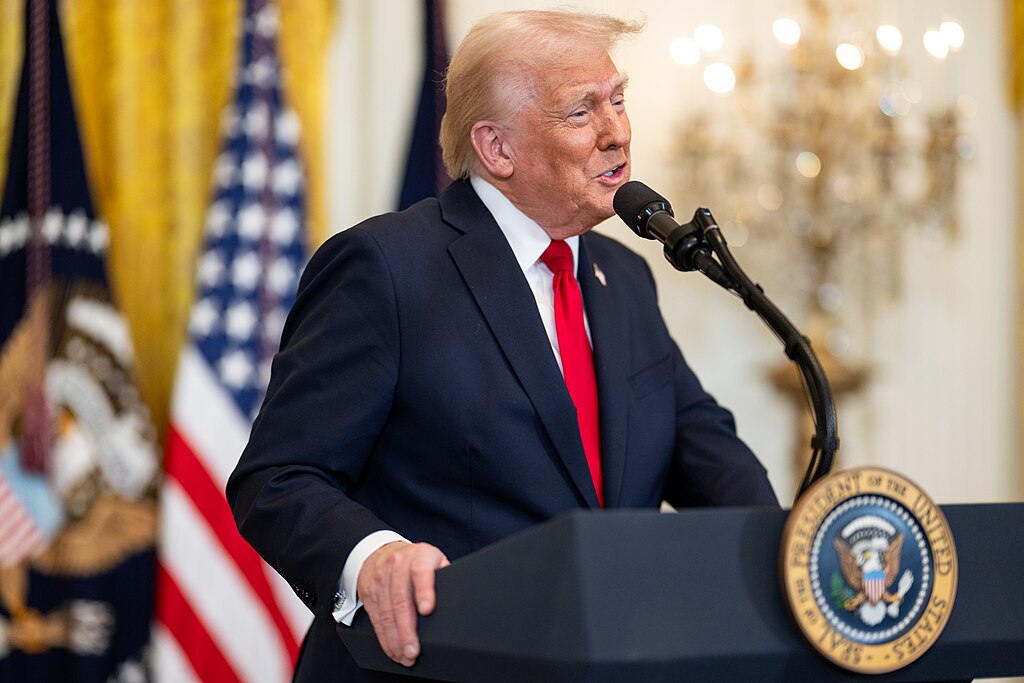
U.S. President Donald Trump said Monday that he would be open to launching military strikes against Mexico if such action were necessary to stop drug trafficking into the United States. Speaking to reporters in the Oval Office, Trump emphasized that he was willing to consider any measure he believed could curb the flow of illegal drugs crossing the southern border. His brief but pointed comment—“Okay with me, whatever we have to do to stop drugs”—quickly drew attention due to its strong stance and the potential foreign policy implications.
Trump has long positioned drug trafficking as a major national security threat, repeatedly citing concerns over cartel activity, fentanyl smuggling, and rising overdose rates in the United States. His remarks align with previous calls from some lawmakers who have proposed labeling cartels as terrorist organizations or authorizing military force against them. Advocates of aggressive intervention argue that Mexico’s criminal organizations have grown too powerful and that cross-border cooperation has been insufficient to stop the surge of fentanyl and other synthetic opioids.
However, critics warn that any U.S. military strike inside Mexico would severely damage bilateral relations, violate international law, and risk destabilizing an already fragile security environment. Mexico has historically rejected foreign military involvement within its borders, and officials have emphasized that addressing organized crime requires cooperation rather than unilateral force. Analysts also note that such an action could spark unpredictable consequences, including retaliatory violence and economic disruption between the two countries.
Trump’s statement adds fuel to ongoing debate about how the United States should combat drug trafficking and whether tougher measures would produce results or deepen regional conflict. As the issue remains central in political discussions, his comments highlight the growing pressure on policymakers to find effective solutions to the escalating drug crisis while navigating the complexities of U.S.–Mexico relations.


