


 Cuba Says No US Talks as Blockade Costs Hit $8.1 Billion
  Australia Plans New Rules Giving Users Control Over Social Media Feeds
  Putin Holds ‘Highly Useful’ Ukraine Peace Talks With Trump Envoys
  Trump Peace Envoys Meet Zelenskiy in Kyiv After Putin Talks
  New Zealand Labour Backs Social Media Ban for Under-16s
  Trump Orders Reduction in U.S.-South Korea Military Drills, Citing Kim Jong Un Ties
  Trump Targets 1,000 U.S. Space Launches Annually by 2030
  Israel Strikes Southern Lebanon After Hezbollah Drone Attack
  Google Changes EU Spam Policy Amid Antitrust Scrutiny
  FCC Steps Up China Tech Crackdown as Beijing Pushes Back
  SEC Seeks ISS Client Voting Records in Proxy Adviser Probe
  FxWirePro- Major Crypto levels and bias summary


 Add as a preferred source on Google
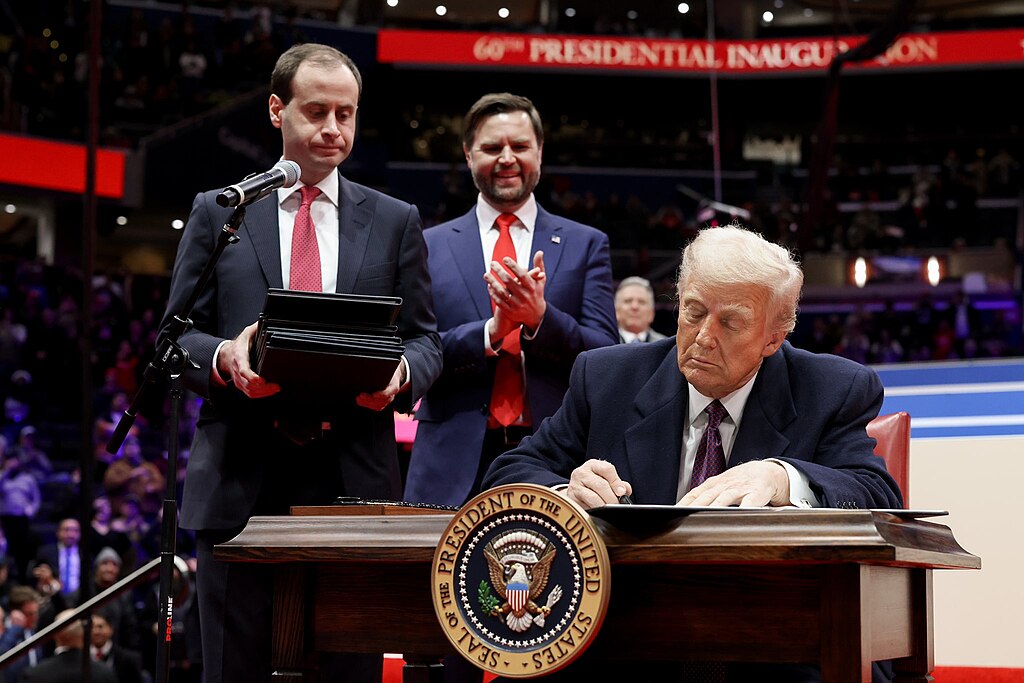
U.S. President Donald Trump has signed the GENIUS Act into law, creating the country’s first regulatory framework for dollar-pegged cryptocurrencies known as stablecoins. The legislation, passed with bipartisan support in both the House and Senate, marks a milestone for the crypto industry and signals a broader embrace of digital assets in the U.S. financial system.
The new law requires stablecoins to be fully backed by liquid assets such as U.S. dollars or short-term Treasury bills, and mandates monthly public disclosure of reserve compositions. Industry leaders say these measures will enhance credibility, accelerate adoption, and encourage usage for everyday payments and money transfers.
Trump, speaking at the signing event, praised the industry’s innovation and declared, “It’s good for the dollar and it’s good for the country.” Treasury Secretary Scott Bessent added the law would reinforce the dollar’s global dominance and fuel demand for U.S. Treasuries, which will serve as backing for the coins.
The stablecoin market, currently valued at over $260 billion, could surge to $2 trillion by 2028, according to Standard Chartered. Major crypto firms like Circle and Ripple are already pursuing banking licenses, aiming to cut costs and scale operations under the new rules.
Trump, who has launched his own meme coin, $TRUMP, and backs World Liberty Financial, positioned the move as part of his broader strategy to make the U.S. “the crypto capital of the world.” The industry reportedly contributed over $245 million to pro-crypto candidates in the last election.
However, critics argue the law lacks safeguards against money laundering and gives too much freedom to tech giants and foreign issuers. Still, the regulatory clarity is expected to drive institutional interest and mainstream adoption of stablecoins across the U.S. economy.







