Prime Minister Keir Starmer is set to announce on Sunday that Britain will officially recognise a Palestinian state, marking a major shift in UK foreign policy. The decision comes despite strong opposition from Israel and disapproval from the United States, Britain’s closest ally.
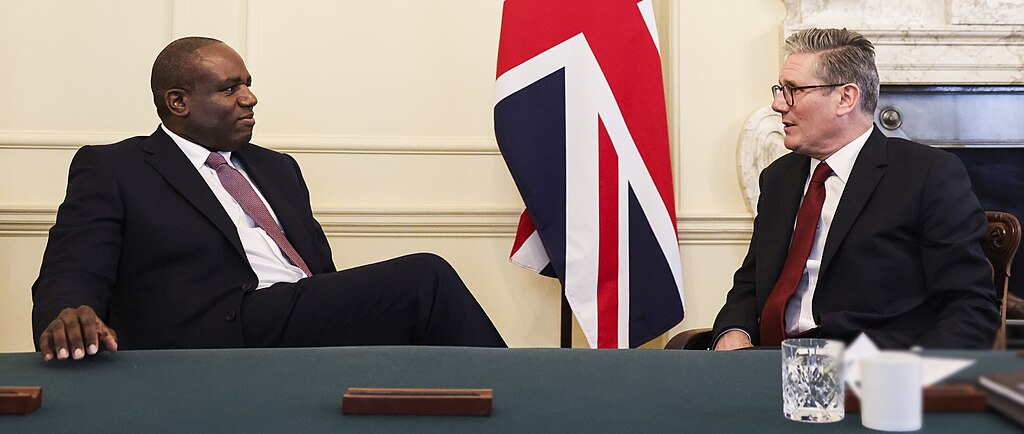
Deputy Prime Minister David Lammy confirmed that Starmer’s announcement is imminent, stressing that recognition should be viewed as part of a wider peace process supporting a two-state solution. The UK move coincides with similar steps expected from France, Canada, Australia, and Belgium during the UN General Assembly in New York.
“Any step to recognise Palestine is about keeping the two-state solution alive,” Lammy told Sky News. However, he made clear that Britain will not condition recognition on a Gaza ceasefire, acknowledging that the conflict remains unresolved and settlement expansion continues.
Starmer previously outlined in July that recognition would depend on Israel halting annexation efforts, increasing aid access to Gaza, and committing to peace talks. But Lammy noted that waiting for “perfect conditions” would deny Palestinians their right to statehood.
Addressing concerns, Lammy distinguished between Hamas, which controls Gaza, and the broader Palestinian population, emphasizing that recognition aims to support peace, not extremism.
The move places Britain among more than 140 UN member states that already recognise Palestine, though its symbolic significance is notable given Britain’s historic role in Israel’s creation after World War Two.
U.S. President Donald Trump, visiting the UK last week, openly disagreed with Starmer’s plan. Still, Starmer said both leaders agreed on the need for peace and a roadmap to stability in the Middle East.
Britain’s recognition of Palestine underscores growing international momentum for a two-state solution, even as violence and political divisions cast doubt on its near-term prospects.