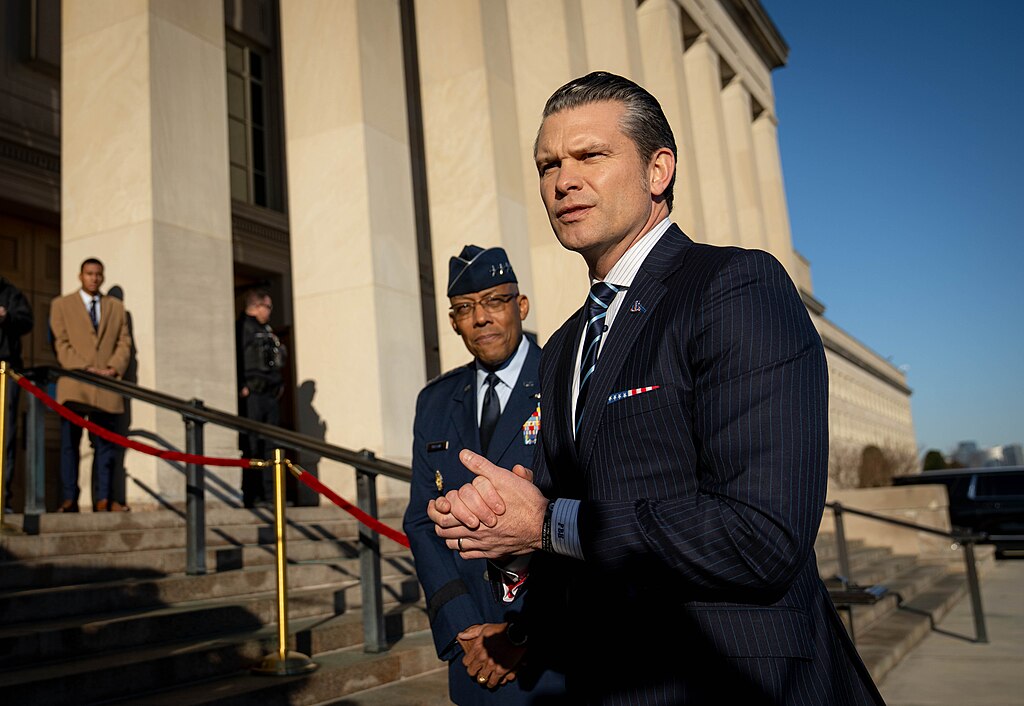
U.S. Defense Secretary Pete Hegseth reaffirmed his support for a September 2 second strike on a suspected drug-running vessel in the Caribbean, saying at the Reagan National Defense Forum that he “fully” backs the decision and would have made the same call. The incident, now under scrutiny, has sparked debate over the legality of the strike and whether U.S. forces violated the Law of War by targeting shipwrecked survivors.
A classified video shown to lawmakers reportedly depicts two unarmed men clinging to debris after their boat was hit. According to sources familiar with the footage, the men appeared shirtless, carried no visible weapons or communication devices, and were not engaging in hostile behavior. This has raised questions about whether the second strike constituted a war crime, as the Defense Department’s Law of War Manual explicitly forbids attacking incapacitated or shipwrecked individuals who pose no threat.
Reports surfaced earlier claiming the additional strike was carried out to satisfy Hegseth’s alleged order to ensure no survivors remained. However, Trump administration officials have since denied that Hegseth directed the second strike. They assert that Admiral Frank Bradley, then commander of Joint Special Operations Command, authorized the follow-up attack out of concern that the wreckage might contain cocaine that needed to be fully neutralized.
Hegseth maintains that he viewed the initial strike but left before any subsequent action, declining to commit to the release of the full video, which he said remains “under review.”
The September 2 operation marked the first of 22 U.S. military strikes on suspected drug-trafficking vessels across the southern Caribbean and Pacific as part of the Trump administration’s intensified campaign against drug cartels. These operations have resulted in 87 deaths to date. Officials continue to frame the effort as a necessary war against violent criminal networks funneling deadly narcotics into the United States.