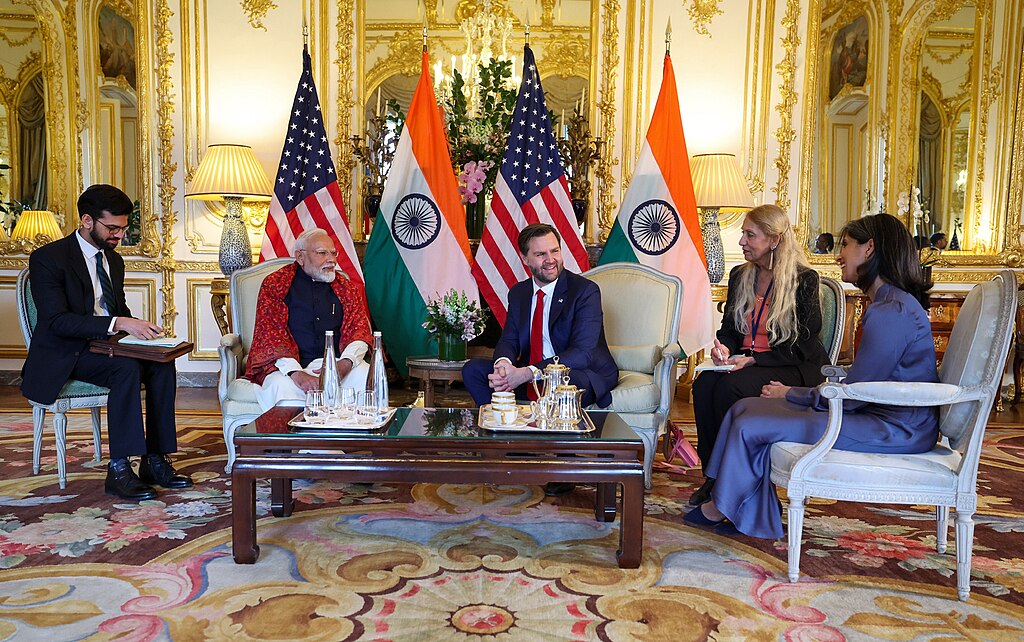
U.S. Vice President JD Vance and Indian Prime Minister Narendra Modi signaled progress toward a potential U.S.-India trade agreement during a key meeting in New Delhi, amid rising tariff tensions and strategic geopolitical shifts. The visit, which blends diplomacy and personal ties—Vance’s wife is of Indian descent—coincides with intensified efforts by India to avoid sweeping U.S. import tariffs announced earlier this month by President Donald Trump.
Both leaders highlighted collaboration in areas such as trade, defense, energy, and technology. Modi reaffirmed India’s desire for dialogue and conveyed greetings to President Trump, anticipating his visit to India later this year for the Quad summit. Vance emphasized the opportunity to negotiate a modern trade agreement that supports job growth in both nations.
The Trump administration’s trade team noted a roadmap was established for future discussions, while U.S. Trade Representative Jamieson Greer criticized India’s "serious lack of reciprocity" in trade, signaling ongoing concerns. India’s Finance Minister Nirmala Sitharaman, currently in San Francisco, said New Delhi aims to finalize the first phase of the deal by autumn, within the 90-day pause on tariff hikes. India’s $129 billion trade with the U.S. in 2024—its largest trading partner—remains imbalanced, with a $45.7 billion surplus in India’s favor.
India is reportedly open to slashing tariffs on over half of its U.S. imports as part of a broader compromise. As U.S.-China tensions escalate, Vance’s high-profile diplomatic role and this visit may set the stage for deeper U.S.-India economic ties ahead of Trump’s expected visit.
This visit underscores the urgency and strategic significance of finalizing a trade pact to safeguard India’s export-driven sectors and bolster bilateral ties with Washington.