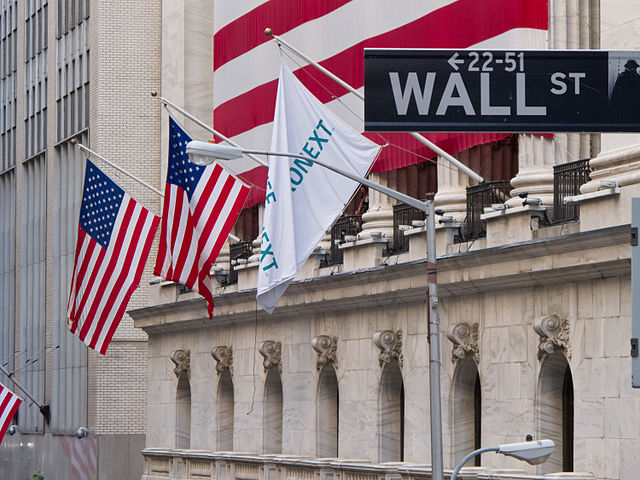
U.S. stocks ended higher on Friday after Federal Reserve Chair Jerome Powell reassured markets that the economy remains strong. However, lingering trade policy uncertainty led to Wall Street’s biggest weekly decline in months.
Powell signaled that the Fed won’t rush to cut interest rates, citing economic stability but also expressing concerns over President Donald Trump’s tariff policies. Market volatility surged throughout the week as investors reacted to trade tensions involving Canada, Mexico, and China.
The S&P 500 suffered its worst weekly loss since September, declining 3.1%, while the Nasdaq fell 3.45% and the Dow dropped 2.37%. The Russell 2000 Small Cap index slid 3.86%. The Nasdaq also confirmed a 10% drop from its December high, marking a technical correction.
Stocks initially dipped on Friday but rebounded following Powell’s remarks. The Dow gained 222.64 points (0.52%) to close at 42,801.72, the S&P 500 added 31.68 points (0.55%) to 5,770.20, and the Nasdaq rose 126.97 points (0.70%) to 18,196.22.
Economic data showed stronger-than-expected job growth in February, though unemployment ticked up to 4.1%, raising concerns about slowing consumer spending. Goldman Sachs and Morgan Stanley revised down their economic growth forecasts, citing weaker consumer activity.
Trump’s temporary four-week tariff reprieve for Canada and Mexico did little to ease market jitters, as new trade barriers with China loom. Hewlett Packard Enterprise (HPE) tumbled 12% due to tariff-related earnings pressure, while Costco (COST) dropped 6% after missing profit expectations. Broadcom (AVGO) surged 8.6% on strong AI-related demand forecasts.
Trading volume hit 16.92 billion shares, exceeding the 20-day average. Declining stocks outnumbered gainers, with the Nasdaq posting 159 new lows versus 28 highs.