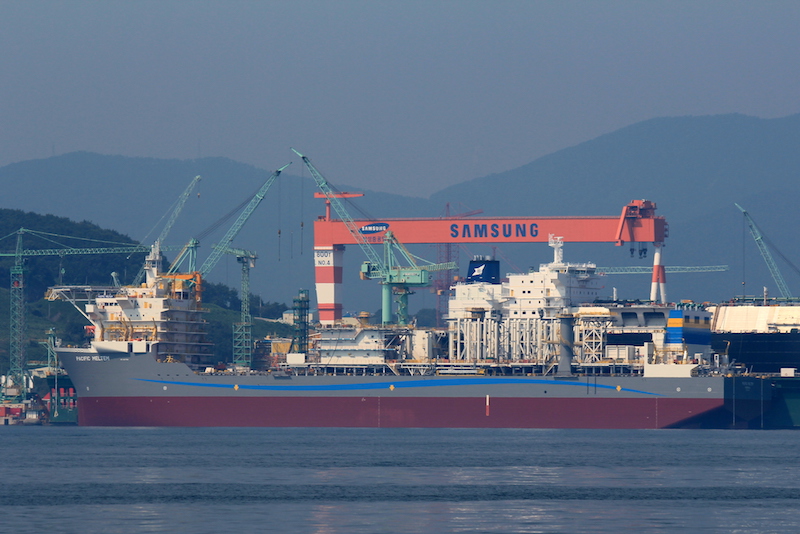
Samsung Heavy Industries Co.'s net loss expanded to 535.9 billion won in the first quarter from a net loss of 227 billion won a year ago due to the COVID-19 pandemic and a surge in prices of steel plates.
The shipbuilder's operating loss for the quarter was at 506.8 billion won, narrowing from an operating loss of 47.8 billion won a year earlier.
It was attributed to the increased cost due to the rise in steel plate prices, allowances, and the evaluation losses from its five drillships.
Sales dropped 13.8 percent on-year to 1.57 trillion won.
With new orders for 42 ships worth $5.1 billion in the first quarter, Samsung Heavy revised its annual order target to $9.1 billion from the current $7.8 billion.
Samsung Heavy claims its cash flow is in good shape, with cash on hand reaching 1.2 trillion won.
To improve its financial health, the shipbuilder is reducing the face value of its shares by 80 percent from 5,000 won to 1,000 won. Since the number of its outstanding shares will remain the same, the capital reduction will not hurt the valuation of its shareholders' holdings.
The shipbuilder also plans to raise 1 trillion won by selling its new shares.

Bank of America Identifies Top Asia-Pacific Semiconductor Stocks Poised for AI-Driven Growth
Foreign Investors Pour $18.65 Billion into Japanese Stocks Amid Market Stabilization
Goldman Sachs, ANZ Cut Oil Forecasts Amid U.S.-Iran Ceasefire Hopes
Pony.ai, Uber, and Verne Launch Europe's First Commercial Robotaxi Service in Zagreb
FedEx Pilots and Union Reach Tentative Agreement on 40% Pay Increase
Alibaba Shares Slide as Jefferies Slashes Price Target Over AI Spending and Business Losses
Ford Issues Major Recall on Over 422,000 Vehicles Due to Windshield Wiper Defect
Goldman Sachs Cuts 2026 Copper Price Forecast Amid Global Growth Concerns
Sterling Slides as Dollar Holds Firm Amid U.S.-Iran Tensions
Anthropic Fights Pentagon Blacklisting in Dual Federal Court Battles
LG Electronics Posts Record Q1 Revenue Amid Strong Demand and Cost Improvements
Gold Prices Dip Amid Middle East Uncertainty and Inflation Fears
UPS and Teamsters Reach Agreement to Limit Driver Severance Program
Dollar Stabilizes Amid Fragile US-Iran Ceasefire as Markets Watch Hormuz Strait
Oil Prices Crash Nearly 15% After Trump-Iran Ceasefire Deal
BHP's Incoming CEO Visits China Amid Pricing Dispute with CMRG
RBNZ Holds Rates at 2.25% as Middle East Conflict Fuels Inflation Concerns 


