


 NASA and Roscosmos Chiefs Meet in Florida to Discuss Moon and ISS Cooperation
  Cogent Biosciences Soars 120% on Breakthrough Phase 3 Results for Bezuclastinib in GIST Treatment
  Blue Origin New Glenn Explosion Could Delay Launch Operations Until 2028
  FDA Adds Fatal Risk Warning to J&J and Legend Biotech’s Carvykti Cancer Therapy
  Trump Administration Releases New UFO Files and Apollo Mission Records
  SpaceX Prioritizes Moon Mission Before Mars as Starship Development Accelerates
  Eli Lilly’s Inluriyo Gains FDA Approval for Advanced Breast Cancer Treatment
  Neuralink Expands Brain Implant Trials with 12 Global Patients
  SpaceX’s Starship Completes 11th Test Flight, Paving Way for Moon and Mars Missions
  Trump and Merck KGaA Partner to Slash IVF Drug Costs and Expand Fertility Coverage


 Add as a preferred source on Google
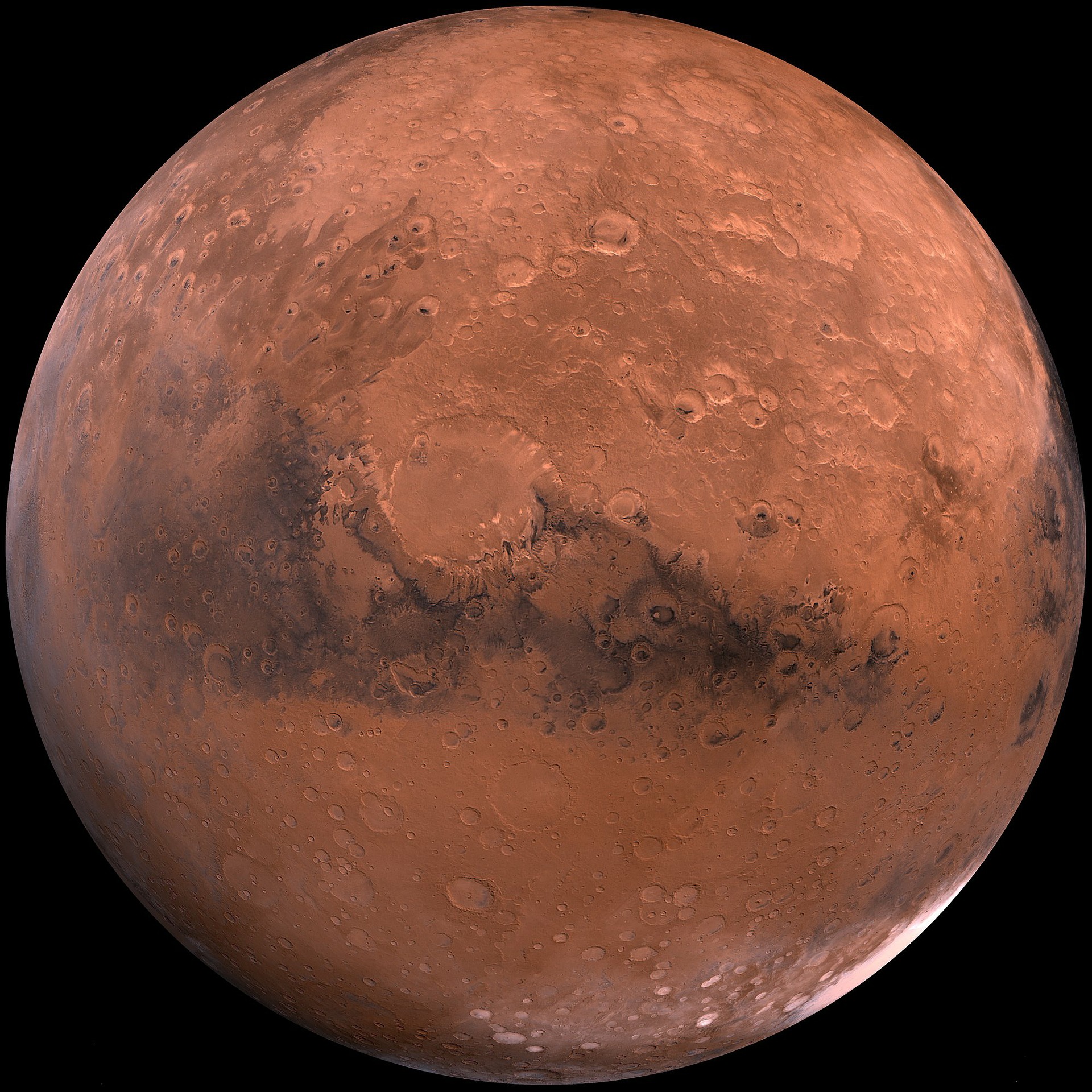
Space exploration has given scientists and space agencies all over the world an opportunity to learn more about the neighboring planets and what lies beyond Earth, including the possibility of alien life. New research suggests that Mars may have had liquid water based on the mud found on the red planet.
Express reports that a study published in the Nature Geoscience journal found that the volcanic lava formations found on Mars may not have come from the red planet’s volcano formations. Instead, the study suggested that the mud that flows from the Martian landscape behave as pahoehoe lava flows, liquid mud spilling over from the frozen crust, and freezing, resulting in the formation of a new flow channel.
But the fact that there is mud present on Mars is enough to suggest that the red planet once had running liquid water or a source of liquid water. Along with the possible liquid water source, the researchers believe that Mars once had a stable environment and conditions that could allow alien life to thrive and exist.
According to the Czech Academy of Sciences Institute of Geophysics Professor Petr Broz, “If these features are indeed results of sedimentary volcanism, this is saying to us that in these areas somewhere in the subsurface has to be a source of mud. In other words, there has to be, or had to be, some sort of aquifer containing liquid water to mobilize the fine-grained sediments and take them to the surface of Mars.”
Professor Broz also noted that this may also exist on other planets in the Solar System.
Speaking of these mud tubes, experts believe that these mud tubes could become potential shelters for astronauts that will land on the red planet. These mud tubes that are found at the Hellas Planitia in the southern hemisphere of Mars, could be used to protect astronauts from cosmic radiation. This is a concern especially as the red planet has a very thin atmosphere and thus the amount of radiation is greater. Scientists have predicted that staying under these mud tubes could protect the astronauts from radiation by as much as 82 percent.
And because it could be closed off, astronauts could be able to add the necessary technology to heat the inside and create a more breathable environment.







