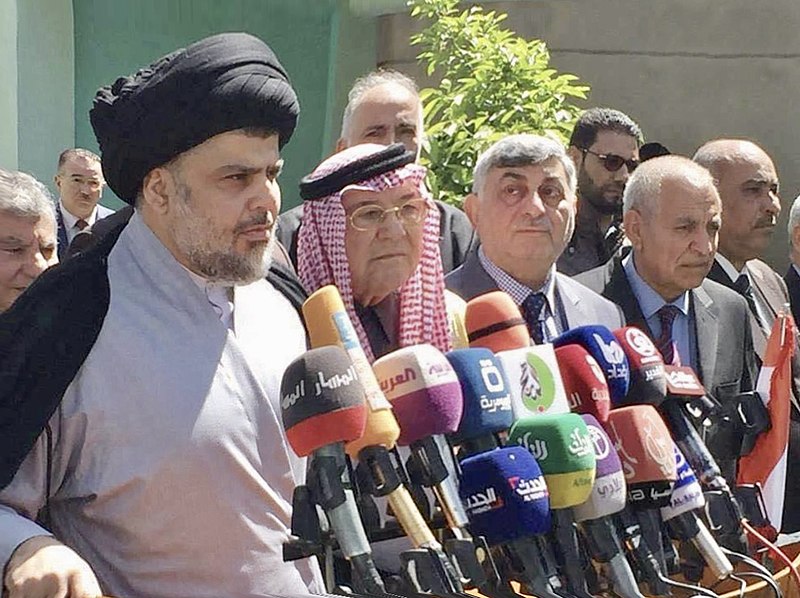
Iraq has been under political unrest for months since the October elections, leading to a deadlock in its government. The ongoing demonstrations by supporters of populist cleric Muqtada al-Sadr have led to Iraq’s judiciary suspending its work this week.
Iraq’s judiciary suspended work Tuesday in light of the extended protests by Sadr’s supporters close to its headquarters, demanding to dissolve parliament.
Sadr’s Shi’ite Muslim supporters began gathering in front of the Supreme Judicial Council and the Federal Supreme Court in the capital Baghdad. The judiciary said in a statement that the supporters were sending threats by phone.
“Will suspend court sessions as a protest against this unconstitutional behavior and will hold the government and political parties which are backing this fully responsible for all the results,” said the judiciary in the statement.
Iraqi Prime Minister Mustafa al-Kadhimi issued a statement urging both sides to calm down and renewed the call for national dialogue. Kadhimi said that by disrupting the judiciary branch, the country could be exposed to “serious risks.”
Sadr has contributed to the escalating political tensions in the country, commanding thousands of his supporters to storm and occupy parliament in protest, preventing the formation of a government almost 10 months after the elections were held.
Sadr and his faction won the most seats during the October elections but failed to reach the numbers to obtain a majority to form a government that excluded the Iran-backed factions.
Sadr, known for having fought US troops, has called for early elections and for changes to the constitution after he and his lawmakers resigned from parliament back in June.
Sadr’s Iran-backed rivals have refused to comply with his demands, further raising concerns of unrest and violence in the country that has already been plagued by war.
The Supreme Judicial Council previously responded to Sadr’s demand to dissolve parliament early this month, saying that it has no authority and that it cannot interfere with the activities of the executive and legislative branches of the government.
The council said, however, that it agreed with Sadr’s criticism of the system and its “failure to elect a president of the republic, a prime minister, and the absence of a government formed within the constitutional timeframe.”