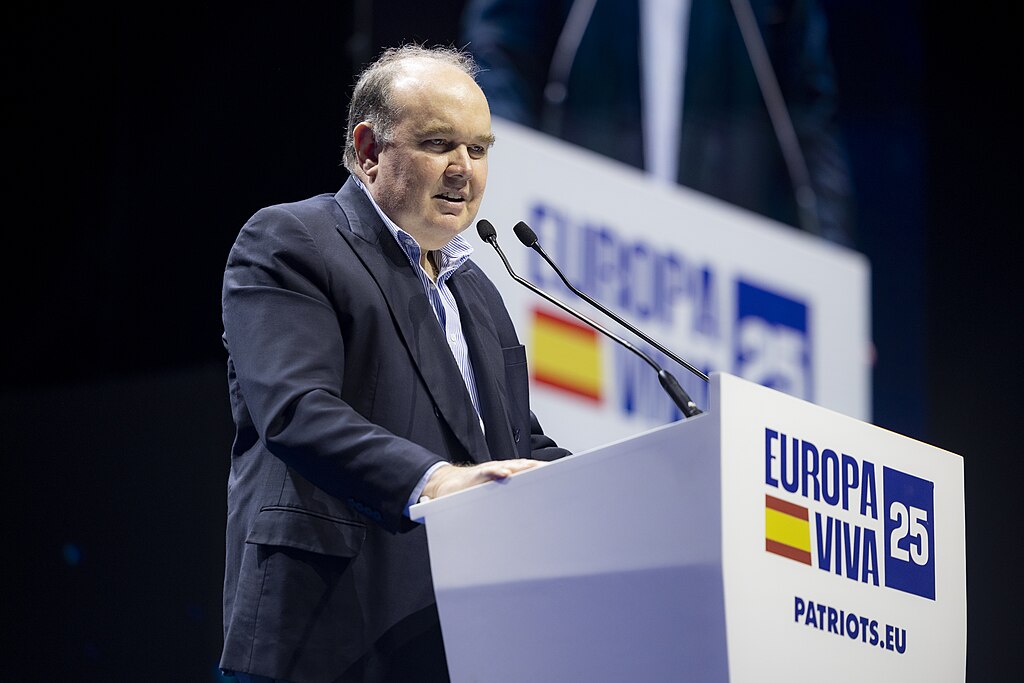
Peru’s capital city mayor, Rafael Lopez Aliaga, officially resigned on Monday to pursue his presidential ambitions for the April 2026 general elections. His resignation comes as the South American nation faces renewed political instability following the sudden ousting of President Dina Boluarte.
Lopez Aliaga, a conservative businessman and former member of the Catholic organization Opus Dei, signed his resignation in a public ceremony before the Lima city council. This marks his second consecutive presidential bid after his previous attempt in 2021. According to a recent Ipsos poll, he currently leads early voter preference with 10% support, making him the only candidate polling in double digits. However, uncertainty remains high as 39% of voters are still undecided.
Popularly known as “Porky” due to his resemblance to the cartoon character Porky Pig, Lopez Aliaga has turned the nickname into a campaign symbol, often featuring a pig mascot at his rallies. His party, Popular Renewal, recently shifted its political stance by supporting a congressional motion that led to Boluarte’s removal. She was swiftly replaced by Congress president Jose Jeri, following the constitutional line of succession.
Meanwhile, Cesar Acuna, the governor of La Libertad and a wealthy entrepreneur, also resigned to join the 2026 presidential race. Acuna, another right-wing contender, currently polls at just 2%.
Under Peruvian law, public officials must resign at least six months before an election to run for office. The official deadline for candidate registration is December 23, ahead of the April 12 elections. So far, the national electoral jury has approved 39 political parties and alliances to participate, signaling a highly polarized race.
Peru continues to face deep political turmoil, averaging one and a half presidents per year since 2018, with three former leaders currently imprisoned. Boluarte’s removal, after leaving office with approval ratings as low as 2%, underscores the country’s ongoing governance crisis.