


 Trump Envoy Meets Sudan Army Chief in Egypt
  Flavio Bolsonaro, Lula Head to Brazil Election Runoff
  OpenAI, Anthropic Back Mandatory AI Breach Reporting in Australia
  North Korea Slams US Taiwan Arms Sales, Reaffirms Russia Support
  Trump Orders Firing Squad Execution for Fort Hood Gunman
  Trump Opens Tax-Exempt Dyed Diesel Access as Fuel Prices Surge
  Vance Demands Iran Cut Nuclear Enrichment to End War
  Rapidus Seeks Chip Customers as Japan Pushes 2nm Semiconductor Revival
  Iran Tanker Attacks Surge as Hormuz Oil Flows Near Prewar Levels
  ISIS Attack Near Kirkuk Kills Iraqi Policeman After US Withdrawal
  France Student Protests Intensify Nationwide
  Fairshake Backs 32 Pro-Crypto House Candidates
  US Army Tests Counter-Drone Technology Along Mexico Border
  Cuba Says US Contacts Continue but Formal Talks Remain Stalled
  India-US Trade Deal Talks Hit Plateau, Sitharaman Says
  Trump Gaza Peace Plan Stalls as Israel Retains Control
  Trump Offers US Help to Russia After Plague Lab Worker Dies


 Add as a preferred source on Google
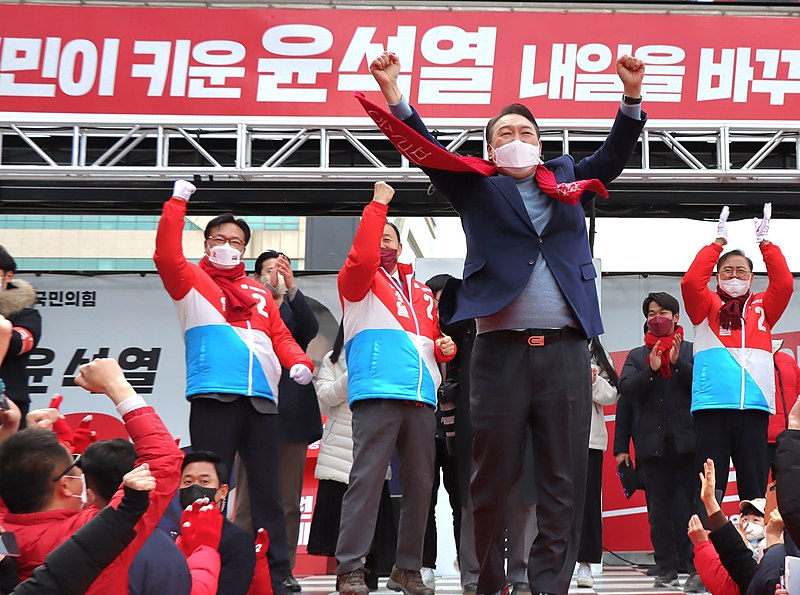
Following a close and bitter presidential race, South Korea has elected its new leader. Conservative opposition candidate Yoon Suk-yeol won the presidency, defeating his liberal rival Lee Jae-myung.
Yoon was elected to the presidency in South Korea this week in a close race between him and Lee. The conservative candidate won 48.6 percent of the country’s votes while Lee had 47.8 percent, from over 98 percent of votes that were counted. Yoon will be succeeding outgoing president Moon Jae-in, for a five-year term and will take office in May.
Yoon, who is a former top prosecutor, said Thursday that he intends to honor the Constitution and the parliament while working with the opposition parties when he takes office. Yoon said that his election was a “victory for the great people.” Yoon also thanked Lee and his other rival candidates in his acceptance speech.
“Our competition is over for now,” said Yoon. “We have to join hands and unite into one for the people and the country.”
In a separate event with supporters, Yoon also said that as president, “national unity” would be among his top priorities, along with his belief that all people should be treated equally regardless of their political, regional, and socioeconomic differences.
When it came to foreign policies, Yoon said that he intends to deal with provocations from North Korea sternly and seek to ramp up trilateral security cooperation with the US and Japan. An enhanced alliance with Washington would also be at the forefront of Yoon’s foreign policy while taking a more assertive approach on China.
Voter turnout during this year’s elections was at 77.1 percent with a record early voting, despite concerns that ballot counting would take longer due to the votes from COVID-19 patients. Around 44 million South Koreans 18 years old and above were eligible to vote. During early voting last week, 16 million ballots were cast.
With Yoon as the next president, he is set to face a host of challenges plaguing the country, with a low birth rate, rising house prices, and the effects of the COVID-19 pandemic on the country.







