President Donald Trump’s administration has outlined a strengthened U.S. strategy aimed at preventing conflict with China over Taiwan and the South China Sea by expanding American and allied military power. The latest National Security Strategy, released Friday, signals a tougher stance as Beijing increases military pressure on Taiwan and asserts expansive territorial claims across East Asia.
The strategy emphasizes that deterring a conflict over Taiwan by maintaining U.S. military overmatch is a top priority. Unlike the 2017 version, which referenced Taiwan only briefly, the updated document mentions the island multiple times and underscores its strategic relevance—particularly its central role in global trade routes and dominance in semiconductor manufacturing.
China considers Taiwan part of its territory and has not ruled out using force to achieve unification. Although the United States does not have formal diplomatic ties with Taiwan, Washington remains its key international partner and is legally required to support its self-defense capabilities. This longstanding commitment continues to fuel tensions between Washington and Beijing.
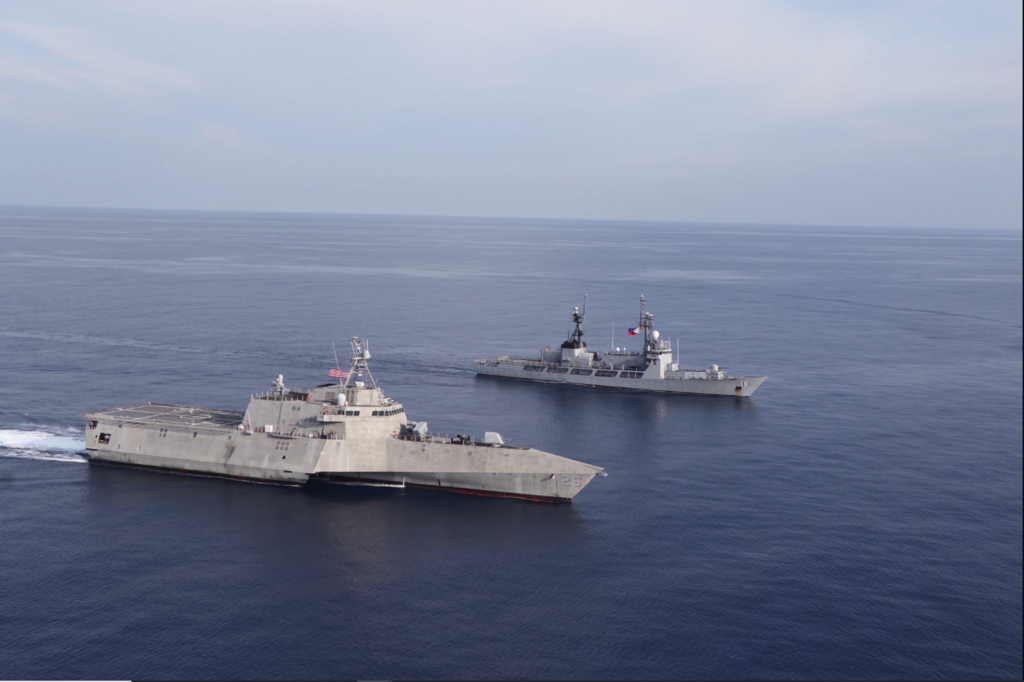
The new strategy stresses that the U.S. will develop a force capable of countering aggression throughout the island chain from Japan to Southeast Asia. However, it also calls on allies to increase defense spending and deepen cooperation to collectively deter any attempt by China to seize Taiwan or undermine regional security.
Trump’s approach comes as he faces scrutiny over his desire to strengthen ties with Chinese President Xi Jinping. He plans to visit Beijing in April to discuss extending their trade truce, raising concerns among some allies about U.S. resolve. Still, recent actions—including new legislation requiring regular reviews of U.S.-Taiwan engagement and approval of $330 million in aircraft parts for Taiwan—signal continued support.
Japan has also drawn Beijing’s ire after comments suggesting it could respond militarily if a Chinese attack on Taiwan threatened Japanese security. Trump privately urged Japan’s prime minister to avoid escalating tensions, while also pressing Tokyo and Seoul to boost defense investment.
This recalibrated strategy underscores Washington’s intent to maintain stability in the Indo-Pacific amid rising geopolitical competition.