


 India Voter List Protests Reach Supreme Court as Opposition Demands Election Chief's Resignation
  Mahmoud Abbas Postpones Palestinian Elections to September 2027
  Trump Denies China, Russia Are Helping Iran in War
  Panama Declares Emergency After 7.7 Earthquake Triggers 200 Aftershocks
  Flavio Bolsonaro Backs Brazil’s 40-Hour Workweek Reform Ahead of Runoff
  Jordan Bardella Antisemitism Allegations Threaten Le Pen’s Campaign
  Pakistan Declares Emergency in Khyber Pakhtunkhwa, Suspends Imran Khan’s PTI Government
  MI5 Warns of Rising Iran, Russia Threats and AI Bioweapon Risks
  Zelenskiy Seeks New US Talks to Revive Ukraine-Russia Peace Negotiations
  US Authorities Raid Ilhan Omar’s Home Amid Immigration Fraud Probe
  North Korea Fires Ballistic Missiles Amid Rising Tensions With South Korea
  US Senate Midterms 2026: Key Races That Could Flip Control
  Trump Defends Russian Diesel Deal Amid US Sanctions Backlash
  US Condemns China Sanctions on Taiwan Allies Belize and Paraguay
  Trump Announces Russia-Ukraine Energy Ceasefire as Zelenskiy Awaits Details
  Most Americans Oppose Election Betting on Prediction Markets, Poll Finds


 Add as a preferred source on Google
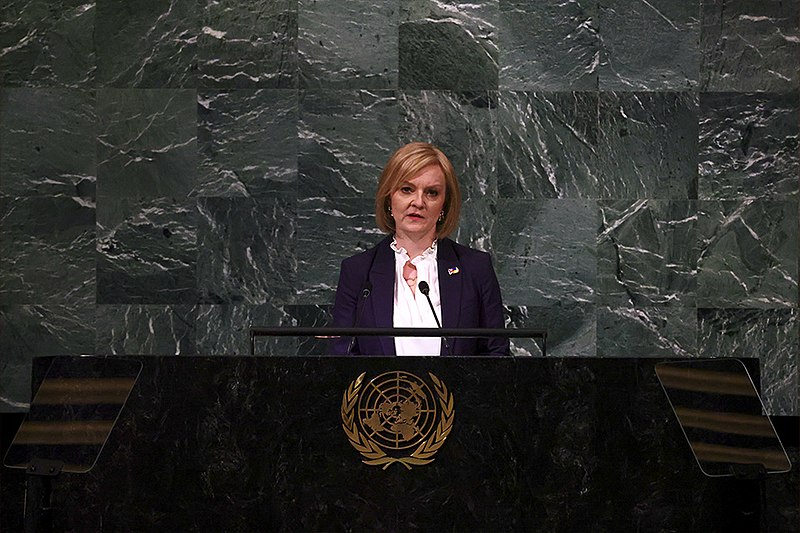
The spokesperson for British Prime Minister Liz Truss said this week that the government must control immigration in a way that works for the country. The comments come amidst reported calls by the interior minister for reduced levels in net migration as ministers consider relaxing visa restrictions.
Truss’s spokesperson said Monday said she wants the government to control immigration in a manner that works for the country. This follows local media reports that interior minister Suella Braverman was pushing for reduced levels of net migration.
The push also comes as ministers are considering relaxing visa restrictions on foreign workers to address labor shortages.
“The prime minister wants to make sure we maintain control of immigration and that it works for the UK,” said the spokesman. “I will let the Home Secretary come forward with further detail.”
Meanwhile, opposition Labor Party leader Keir Starmer is set to unveil his proposal for economic growth and end what he described as a cycle of “crisis” by saying the Labor Party supports “sound money” compared to the current Conservative government.
During the Labor Party’s annual conference, Starmer is expected to target Truss’s plan to revive the country’s economic growth. Starmer is set to say the Labor Party in government would create jobs, improve skills, and address climate change instead of offering tax cuts for the wealthiest.
In excerpts of his remarks, Starmer will say his proposal “will require a different way of working – the biggest partnership between government, business, and communities this country has ever seen.”
Starmer will also say that in the first 100 days of a Labor government, he will start his plan to create one million new jobs in cities and towns, lower energy bills, raise living standards, and tackle climate change.
Sunday, Truss said allies must remain firm in supporting Ukraine while ignoring the “saber-rattling” by Russian leader Vladimir Putin in his threats to the West.
In an interview with CNN, Truss said Putin’s plan to escalate his invasion of Ukraine by partially mobilizing reserve troops was because the Russian leader was not winning and that he made a “strategic mistake” by not anticipating the reaction from the rest of the world to his threats.







