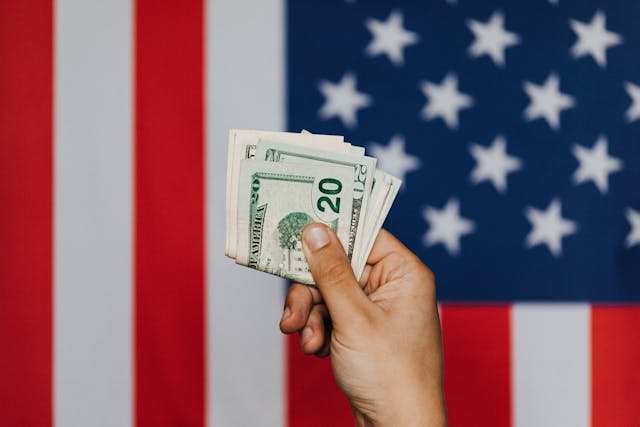
The U.S. dollar regained strength in early Asian trading on Thursday after the Supreme Court announced it would hear arguments in January regarding former President Donald Trump’s attempt to remove Federal Reserve Governor Lisa Cook. With Cook remaining in her position for now, market fears over the Fed’s independence have temporarily subsided. Analysts noted that this reduces short-term political risk for the central bank, allowing traders to shift focus back to economic data and the ongoing U.S. government shutdown.
The dollar index, which tracks the greenback against a basket of major currencies, rose 0.1% to 97.80, rebounding after four consecutive days of losses. Market watchers highlighted that the prolonged government shutdown has disrupted the release of key federal economic data, creating a “void” until at least October 13. This gap has left investors relying on private data such as ADP’s payroll report, which showed U.S. private sector jobs unexpectedly fell by 32,000 in September following a revised 3,000 decline in August.
The shutdown has intensified political divisions, with the Trump administration freezing $26 billion earmarked for Democratic-leaning states. Betting markets such as Polymarket suggest the standoff could last one to two weeks, though odds of a longer shutdown remain significant.
Meanwhile, the Federal Reserve is widely expected to cut interest rates at its October meeting, with futures pricing in a near-certain 25 basis point reduction. Manufacturing activity showed modest improvement last month, but weak new orders and hiring reflect continued pressure from tariffs and policy uncertainty.
In commodities, gold eased 0.2% to $3,857.09 per ounce after recent record highs. The dollar climbed to 147.305 yen and 7.13 offshore yuan, while the euro slipped to $1.1725. Sterling traded steadily at $1.3474, and the Australian and New Zealand dollars saw limited movement in early Asia.
This combination of political risk, central bank speculation, and economic uncertainty ensures that currency markets remain volatile as traders await clarity from Washington and the Fed.