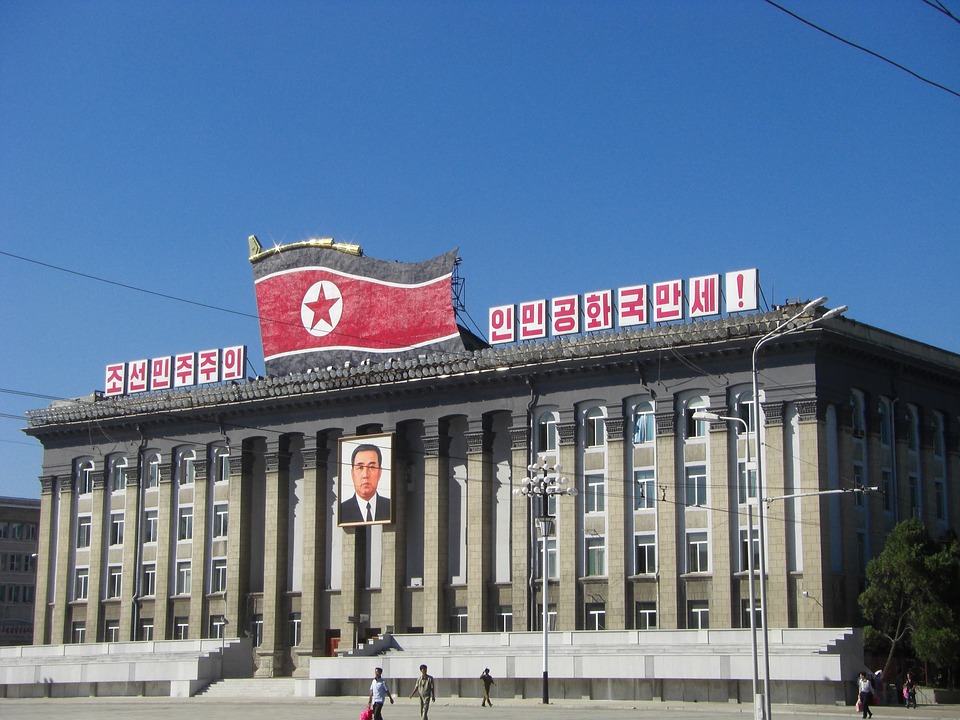
As the world battles the coronavirus pandemic, tensions between countries remain, further raising fears of a potential World War III. North Korea’s leader Kim Jong Un reportedly boasted about the strength of the nation’s nuclear weapons as of late, in the midst of constant pressure from other nations.
North Korean state media reports that during a reception for veterans commemorating the end of the Korean War that lasted between 1950 to 1953. Kim addressed the guests who were present, boasting the strength of their nuclear weapons, saying that North Korea is now capable of defending itself from pressure and threats from “imperialist and hostile forces.”
Kim continued to say, “Thanks to our reliable and effective self-destructive nuclear deterrent, there will no longer be war, and our country’s safety and future will be firmly guaranteed forever.”
The North Korean leader’s comments follow the continuous talks about denuclearizing the communist nation in exchange for relief from sanctions that the United States may impose that were previously postponed. The discussions fell through by 2019, and Donald Trump attacked and threatened Kim and North Korea by then. However, in a seemingly changed tune, Trump revealed early this month that he was open to meeting with Kim, despite Pyongyang saying that it is not interested in continuing the postponed nuclear talks.
North Korea has since said that it is no longer interested in meeting with Trump and the United States. Officials have reasoned that meeting with Trump would only benefit his domestic political plans.
North Korea is not the only country as of late that has been touting its weapons. Russia has further stoked fears of a World War III when President Vladimir Putin announced his pledge to add 40 more warships during the parade celebrating Navy Day. The parade to honor the country’s Navy took place in St. Petersburg this year, to demonstrate the Russian Navy’s growing power, according to Putin.
The 40 warships that will be added this year will be of different classes and equipped with hypersonic weapons.
The Kremlin has reportedly focused on modernizing its military in the face of escalating tensions with the West.