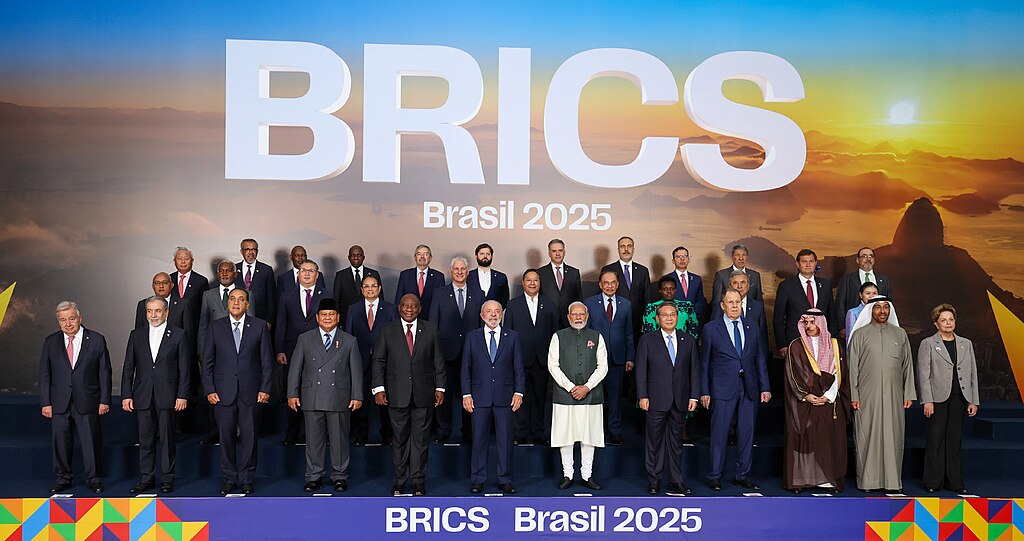
At the BRICS summit in Rio de Janeiro, leaders from Brazil, Russia, India, China, and South Africa dismissed U.S. President Donald Trump’s accusations of being “anti-American” and threats to impose new tariffs. Trump had warned of a potential 10% tariff on BRICS nations and previously threatened 100% tariffs if the bloc undermined the U.S. dollar in global trade.
Brazil’s President Luiz Inácio Lula da Silva responded sharply, saying, “The world doesn’t need an emperor,” and defended the BRICS’ vision of reshaping global economic order. While Brazil recently backed away from promoting a common BRICS currency, Lula reiterated the need to reduce dependence on the U.S. dollar, calling for gradual reforms in global trade settlement mechanisms.
Other BRICS members offered more measured responses. South African President Cyril Ramaphosa stressed cooperation over confrontation and remained hopeful about reaching a trade deal with the U.S. China’s foreign ministry emphasized “win-win” diplomacy, rejecting coercive tariff use. Russia called BRICS collaboration a “common world view” not aimed at any specific country.
India has yet to officially respond, while new member Indonesia’s economic minister is headed to the U.S. for direct tariff discussions. Malaysia, present as a partner country, reaffirmed its commitment to independent economic policies despite suspended 24% tariffs.
The summit’s joint statement condemned the bombing of member nation Iran and warned that rising tariffs threaten global trade stability. As G7 and G20 struggles continue amid global tensions, BRICS promotes itself as a stable platform for multilateral diplomacy.
With Saudi Arabia and over 30 other nations showing interest in joining, BRICS is expanding its influence, challenging traditional power structures and pushing for a more balanced global economic system.