


 Trump Administration to Launch Autism Initiatives Targeting Acetaminophen Use and New Treatment Options
  FDA Adds Fatal Risk Warning to J&J and Legend Biotech’s Carvykti Cancer Therapy
  Is space worth the cost? Accounting experts say its value can’t be found in spreadsheets
  SpaceX’s Starship Completes 11th Test Flight, Paving Way for Moon and Mars Missions
  SpaceX Prioritizes Moon Mission Before Mars as Starship Development Accelerates
  NASA and Roscosmos Chiefs Meet in Florida to Discuss Moon and ISS Cooperation
  SpaceX Pivots Toward Moon City as Musk Reframes Long-Term Space Vision
  Eli Lilly’s Inluriyo Gains FDA Approval for Advanced Breast Cancer Treatment
  Blue Origin New Glenn Explosion Could Delay Launch Operations Until 2028
  Neuralink Expands Brain Implant Trials with 12 Global Patients
  Trump and Merck KGaA Partner to Slash IVF Drug Costs and Expand Fertility Coverage
  Blue Origin’s New Glenn Achieves Breakthrough Success With First NASA Mission


 Add as a preferred source on Google
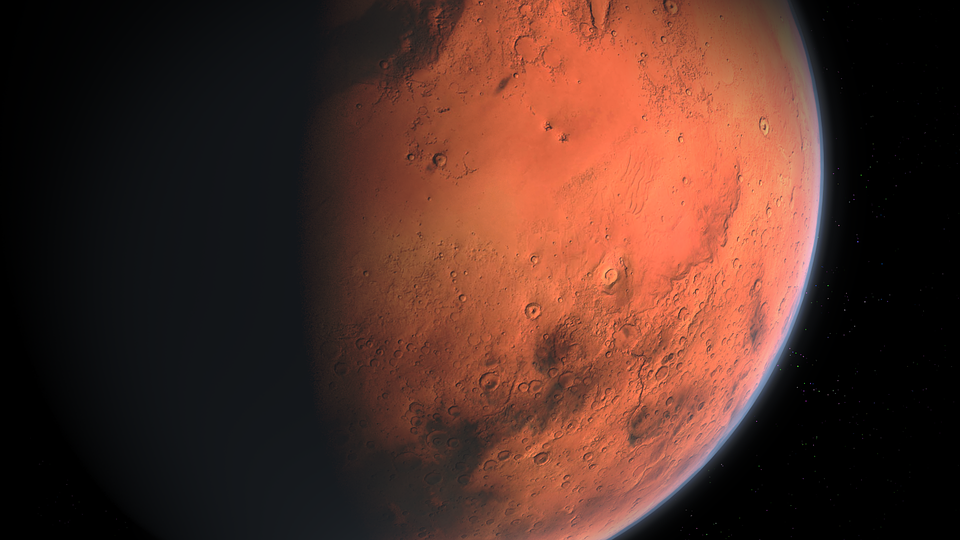
Several space agencies in the world are gearing up for their respective Mars missions. With the European Space Agency and Russia’s Rocosmos teaming up for a Mars mission, scientists say that the best place to search for alien life on the red planet would be under its surface.
Express reports that a study conducted by astrophysicist and researcher Dimitra Atri from the NYU Abu Dhabi Center for Space Science found that the subsurface conditions on Mars may be the most ideal place for finding microorganisms. As to why the subsurface is the best place to look for alien life, this is because there are traces of water present and that any life under the surface of Mars would be protected from solar radiation, as the Red Planet is known for having a thin or a barely-there atmosphere.
The ESA and Rocosmos’ joint rover, ExoMars will be launching in 2022, making this find especially significant in the upcoming Mars mission of the agencies.
“It is exciting to contemplate that life could survive in such a harsh environment, as few as two meters below the surface of Mars. When the Rosalind Franklin rover onboard the ExoMars mission equipped with a subsurface drill, is launched in 2022, it will be well-suited to detect extant microbial life and hopefully provide some important insights,” said Atri.
The ExoMars rover’s final testing is expected to take place in Turin, Italy. The actual Mars mission for the rover was originally scheduled this year, however, due to the safety concerns and travel restrictions from the pandemic, the agencies had to postpone the launch until 2022.
Meanwhile, scientists have recently found traces of carbon dioxide and ozone on Mars’s atmosphere, further raising the possibility of life existing on the Red Planet. Scientists will use this finding to see if there is methane on Mars as it may be a sign of alien life.
However, the presence of methane on Mars in itself has been subject to debate since 2003. Nevertheless, the ExoMars Trace Gas Orbiter found unusual signatures of carbon dioxide and ozone on the wavelengths where methane is expected to be present.







