


 New York Declares Measles Disaster Emergency as Cases Surge
  US DOT Ends Airline Privacy Review Without Enforcement
  Rapidus Seeks Chip Customers as Japan Pushes 2nm Semiconductor Revival
  Vance Demands Iran Cut Nuclear Enrichment to End War
  Mexico Seeks US Evidence After Border Gunfire Claim
  Becton Dickinson to Invest $3 Billion in U.S. Medical Manufacturing
  OpenAI, Anthropic Back Mandatory AI Breach Reporting in Australia
  Iran Tanker Attacks Surge as Hormuz Oil Flows Near Prewar Levels
  Takaichi Pledges to Control Japan Bond Issuance
  Trump Envoy Meets Sudan Army Chief in Egypt
  Ukraine Faces $56 Billion Budget Gap as War Costs Soar
  Trump Gaza Peace Plan Stalls as Israel Retains Control
  Ukraine to Intensify Strikes on Russian Oil Refineries
  Zelenskiy Warns Russia Is Preparing Massive Attack on Ukraine
  Trump Orders Firing Squad Execution for Fort Hood Gunman
  Trump Offers US Help to Russia After Plague Lab Worker Dies
  Russian Bombs Kill Six, Injure Nearly 60 in Kharkiv


 Add as a preferred source on Google
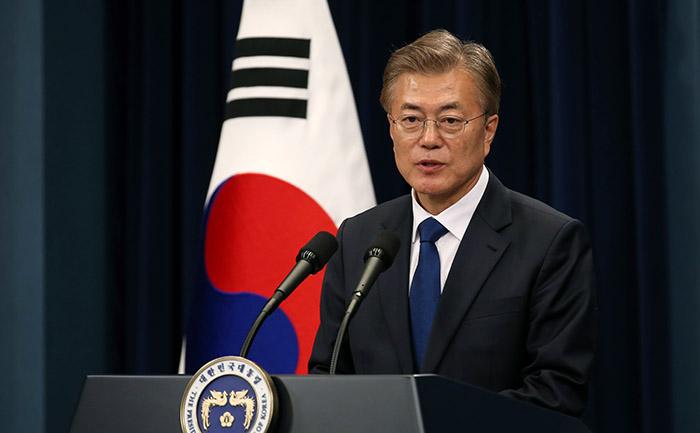
North Korea has continued testing its missiles despite sanctions and backlash from the international community. South Korean President Moon Jae-in recently warned that the Korean peninsula may be brought into a crisis should North Korea continue missile testing.
In a statement released to reporters this week, Moon stressed the need to prevent North Korea from testing its nuclear or long-range missiles. Moon warned that the region would face a crisis should Pyongyang continue its testing, and called for dialogue and diplomacy to make it happen. This comes as North Korea had carried out a record number of missile tests in January, with North Korean leader Kim Jong-un suggesting he may order more tests to happen.
“If North Korea’s repeated missile launches go as far as to breach moratorium, that would instantly bring the Korean Peninsula back to the crisis situation five years ago when there were concerns of war,” said Moon, referring to Kim’s self-imposed halt on testing ballistic missiles. “The political leaders of related nations should engage in persistent dialogue and diplomacy to prevent a similar crisis.”
This also comes as Washington and Pyongyang remain at odds over North Korea’s nuclear program. The tensions between the two countries proved to be a setback for Moon, who sought to improve relations between the two Koreas during his presidency. Moon is set to leave office in May following the South Korean presidential elections that will take place in March.
The outgoing South Korean leader shared that his biggest achievement was helping shift engagement towards diplomacy instead of military confrontation. However, Moon also revealed that his biggest regret was the unsuccessful summit between the US under Donald Trump and North Korea in Hanoi.
Nevertheless, Moon urged to return to top-down diplomacy, and that it would only be a matter of time before US President Joe Biden and Kim meet.
Meanwhile, the US think-tank Center for Strategic and International Studies released a report, saying that Pyongyang has completed a secret base close to its border with China that is believed to be for housing its long-range ballistic missiles. The report said that through satellite images, the Hoejung-ni missile operating base was identified.







