


 Rapidus Seeks Chip Customers as Japan Pushes 2nm Semiconductor Revival
  Mexico Bars Dual Citizens From Presidential Races Starting in 2028
  France to Release 10 Million Barrels of Diesel to Ease Fuel Prices
  Trump Envoy Meets Sudan Army Chief in Egypt
  Trump Weighs FBI Probe Into Nolan Wells’ Death
  Saudi Airport Attacks Kill Three as Yemen Fighting Escalates
  Trump Says He Deserves 2026 Nobel Peace Prize Despite Uncertain Chances
  Tsai Warns of China’s Sustained Pressure on Taiwan
  Hegseth Praises USS Abraham Lincoln Crew After Record Iran War Deployment
  JD Vance Says Iran Must Cut Nuclear Enrichment to End War
  San Francisco Halts New Data Center Construction With 45-Day Moratorium
  Merz Warns of Extremism After AfD Gains Power in Saxony-Anhalt
  US Pressures Allies to Distance From Anti-Disinformation Conference
  Saudi Arabia Probes Flydubai Cockpit Attack
  US, Greece Launch New Counterterrorism Security Program
  Vance Demands Iran Cut Nuclear Enrichment to End War
  Mike Rogers Calls for End to US-Canada Tariff War


 Add as a preferred source on Google
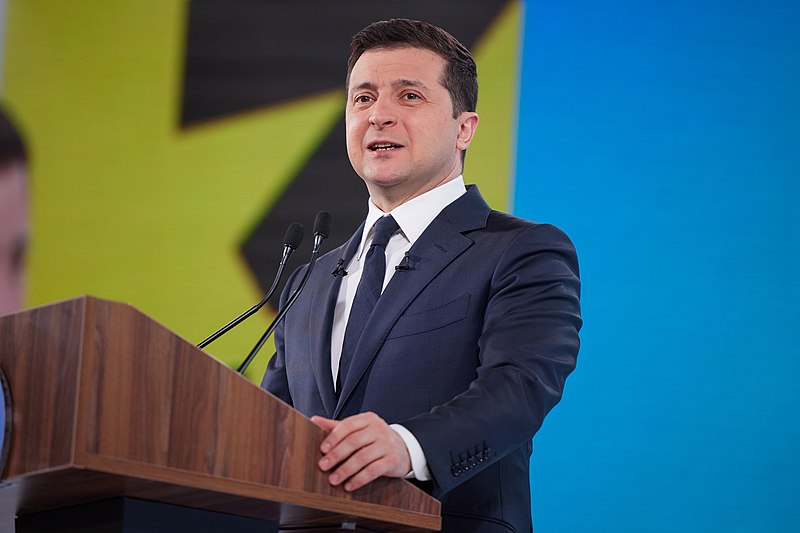
The buildup of troops at the border that Ukraine and Russia share is one of the latest instances where tensions between both nations have escalated. With the possibility of turning into a military conflict, Ukrainian President Volodymyr Zelensky has called for direct talks with his Russian counterpart Vladimir Putin to ease the tensions.
Zelensky on Wednesday called for direct talks with Moscow in his address to the Ukrainian parliament. This follows Ukraine’s call for NATO to prepare sanctions on Russia while also bolstering its military cooperation with Kyiv in an effort to deter Russian troops from carrying out a new attack.
Ukraine and its allies in NATO have raised concerns about Russian troop activity in the borders of Ukraine this year. This led to fears of a possible military conflict occurring in the region.
“We must tell the truth that we will not be able to stop the war without direct negotiations with Russia, and today this has already been recognized by all, all external partners,” said Zelensky.
“I am not afraid of a direct conversation with them, we are not afraid of a direct dialogue, we know which of the European countries support Ukraine,” said the Ukrainian leader.
Zelensky also said that his administration was trying to set up an in-person meeting with Putin, but the requests were ignored by the Kremlin. The Kremlin has said that Putin is not against having talks with Zelensky, but talks for the sake of talks would prove to be futile, and Moscow would want to see a proper agenda before agreeing to a meeting.
The US has also called for Russia to pull back its troops at the border and warned that any attempt at an invasion would result in sanctions of the gravest extent. Speaking in Latvia, US Secretary of State Antony Blinken said that while it is not certain whether Russia has made the decision to launch an invasion of Ukraine, but reiterated that the US and NATO will respond.
“We don’t know whether President Putin has made the decision to invade. We do know that he is putting in place the capacity to do so. Should Russia follow the path of confrontation, when it comes to Ukraine, we’ve made clear that we will respond resolutely, including with a range of high impact economic measures that we have refrained from pursuing in the past,” said Blinken.







