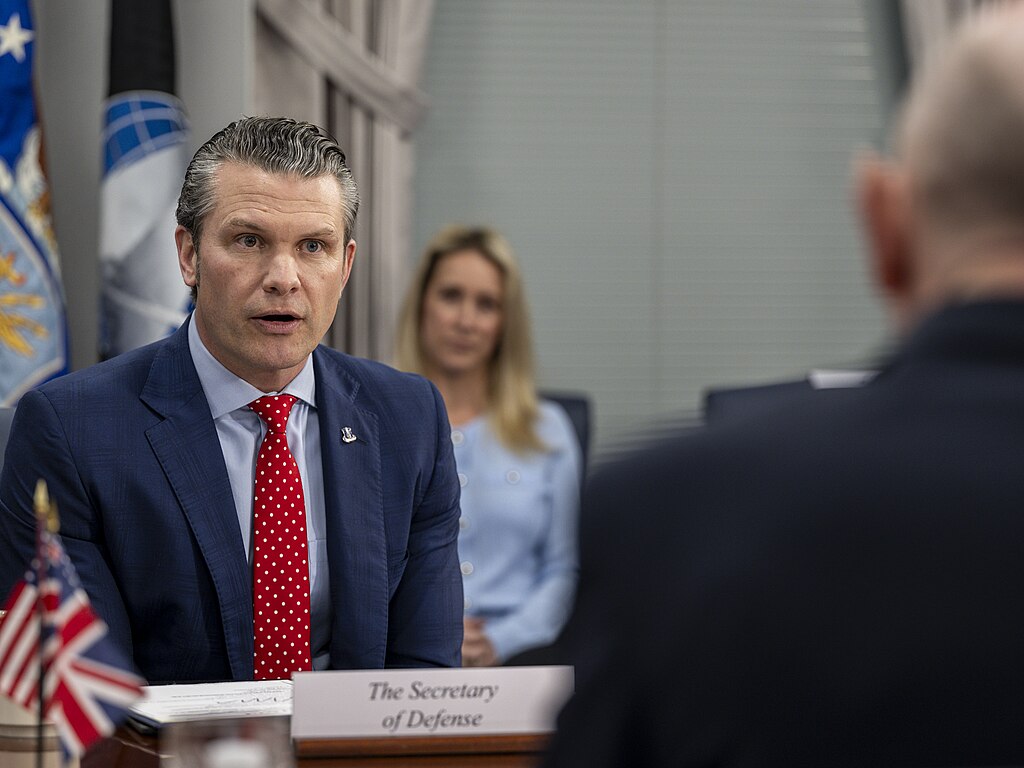
U.S. Secretary of Defense Pete Hegseth is set to meet Japanese Defense Minister Shinjiro Koizumi in Tokyo on Wednesday, underscoring efforts to bolster Japan’s defense strategy and deepen the long-standing U.S.-Japan alliance. The high-level talks come just a day after Japanese Prime Minister Sanae Takaichi assured visiting U.S. President Donald Trump of her determination to enhance Japan’s military capabilities and usher in what she called a “new golden age” in bilateral relations.
Japan already hosts the largest concentration of U.S. forces overseas, including an aircraft carrier, a Marine expeditionary unit, and numerous fighter jets. These assets form the backbone of regional security cooperation between the two allies, serving as a key deterrent amid growing threats in the Indo-Pacific.
In a recent policy address, Prime Minister Takaichi announced plans to increase Japan’s defense spending to 2% of its gross domestic product (GDP) by the fiscal year ending March 2026 — two years ahead of schedule. The current defense allocation stands at approximately 1.8% of GDP. While this move signals Japan’s strong commitment to national security, it remains below NATO’s new defense investment benchmark of 5% of GDP by 2035.
The urgency behind Japan’s military buildup stems from what Tokyo describes as the most severe security environment since World War II. Regional instability, driven by China’s expanding military presence and North Korea’s ongoing missile and nuclear programs, continues to shape Japan’s strategic priorities.
Defense Minister Koizumi, who recently lost to Takaichi in the ruling Liberal Democratic Party’s leadership race, is expected to work closely with Hegseth to reinforce bilateral defense cooperation and ensure a stable security framework in the face of evolving regional challenges.