


 Zcash Privacy Demand Rises as AI Exposes Bitcoin Transactions
  DogecoinVM Makes DOGE Transactions 300x Faster
  Oil Prices Rise as Hormuz Risks Offset IEA Stock Release
  Fed Minutes Signal Another Rate Hike by Year-End
  Fed Unveils Stablecoin Rules Under GENIUS Act
  China Shuts 670 Banks as Bitcoin Eyes Financial Risks
  U.S. Government Moves Over $100M in Bitcoin and BNB
  Strategy’s STRC Nears $100, Raising Prospects for Major Bitcoin Buys
  Samsung, SK Hynix Shares Fall Ahead of Q3 Earnings
  S&P 500 Hits Record High as AI Rally Lifts Wall Street
  Circle Stock Falls 4% as Crypto Selloff Overshadows SAP Pay Expansion
  Sector Spotlight: Data Availability and Storage Lead 24-Hour Market Gains
  Asian Currencies Mixed as Yen Weakens, Dollar Holds Firm
  Fairshake Backs 32 Pro-Crypto House Candidates


 Add as a preferred source on Google
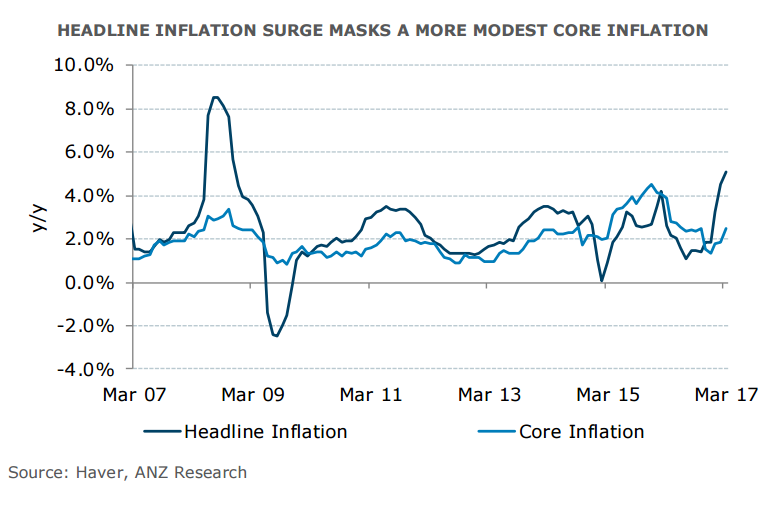
Malaysia's consumer price inflation hit an eight-year high in March, data released by the Malaysian statistics department showed on Wednesday. Malaysia’s headline inflation accelerated to 5.1 percent in March, from 4.5 percent in the previous month. The rise was slightly below the forecast in a Reuters poll at 5.2 percent.
Low-base effect and higher retail fuel prices exacerbated the rise in headline inflation. Fuel prices have a weighting of 7.8 percent in the CPI basket and a 48 percent y/y average increase in domestic fuel prices and the attendant knock-on impact on transport costs was seen as the main driver. Core inflation, which excludes volatile items of fresh food and administered prices of goods and services, remained stable at 2.5 percent y/y.
For April, inflation is likely to remain elevated. Notwithstanding increases in energy and food prices, the prices in other categories have remained relatively benign. Analysts expect core inflation to stay relatively modest, as growth is likely to remain under pressure. Growth dynamics also do not point to the emergence of strong demand-pull inflationary pressures.
"We expect headline inflation to be more volatile from April onwards as fuel prices, which have a weighting of 7.8% in the CPI basket, have been adjusted on a weekly basis since 30 March. We expect the weekly fuel adjustments month-to-date to add around 1.8ppt to April’s headline CPI print," said ANZ in a report.
Bank Negara Malaysia (BNM) said headline inflation will be "relatively high" in the first half of 2017 on higher fuel prices, but expects it to dip in the second half. BNM expects headline inflation to be 3 to 4 percent in 2017, against 2.1 percent last year. Accordingly, today's inflation spike is not expected to push the central bank to change its stance on monetary policy.
"BNM will likely peer through the inflation ascent and the central bank is likely to maintain its policy rate at 3% through 2017," adds ANZ.
USD/MYR was trading 0.29 percent lower on the day at around 4.3960 at 1130 GMT. Price action has been ranging since Jan 2017 and we see scope for downside. Price action has dipped below the daily Ichimoku cloud. Major support on the downside is seen at 4.2931 which is the 200-day moving average.
FxWirePro's Hourly USD Spot Index was at -67.1594 (Neutral) at 1130 GMT. For more details on FxWirePro's Currency Strength Index, visit http://www.fxwirepro.com/currencyindex.







